
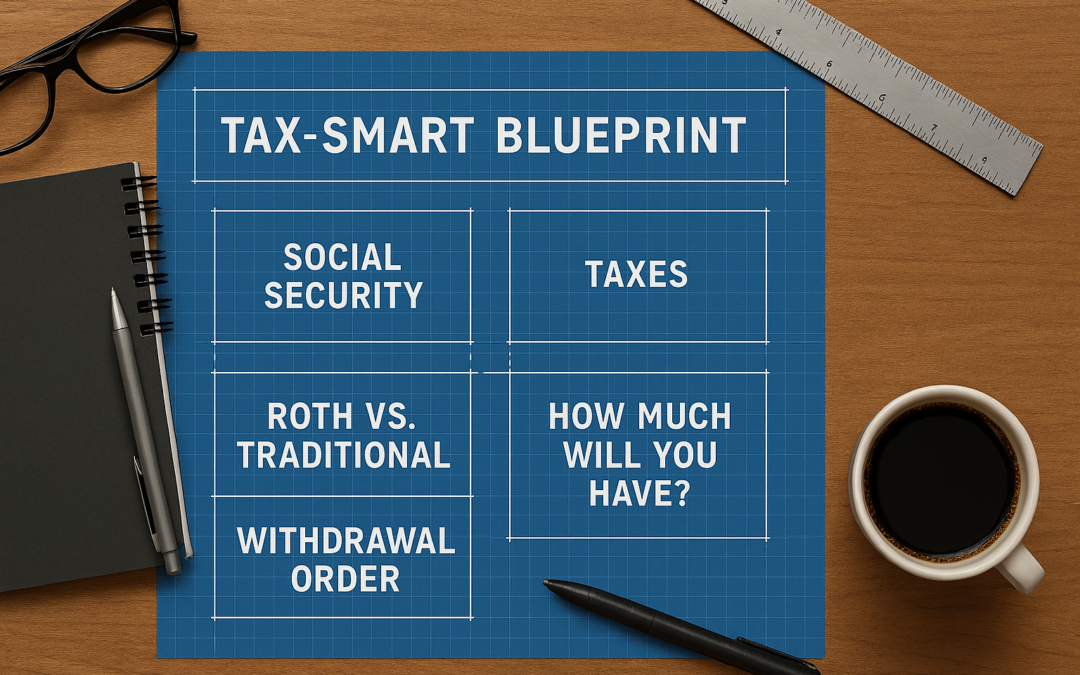
There are only three questions you need to answer to ensure your money continues working for you throughout your retirement. Over the past two months, we’ve covered “How Long Will You Live?” and “How Much Will You Spend?” both of which you can revisit under the ‘Retirement Tips’ tab. This month, we’ll address the final question: “How Much Will You Have?”
It doesn’t matter what you make; it matters what you keep. When you’re accumulating assets for retirement, that means spending less than you’re earning. Making a habit of budgeting and ensuring that each pay raise leads to increased savings rather than higher spending is one of the most important steps you can take to maximizing how much you’ll have later.
Once you’ve started retirement, maximizing how much you keep gets more complex. A 2017 Social Security administration study found that there are over 9,000 different ways a married couple could go about claiming their benefits. The difference between the most and least optimal selection is typically over a $100,000 difference in lifetime Social Security payments for the people we work with. Picking which of those 9,000 ways is best involves more than using a simple online calculator too, because the gross amount of total Social Security, much like other income, is not the most important. The most important is how much you keep and how much you keep depends on how much is lost to Uncle Sam.
For far too many, taxes are the largest expense in retirement. Minimizing taxes is key to maximizing how much you’ll have and goes well beyond choosing when to start Social Security. Which pension option you choose, whether that be a lump sum or traditional payments and how much, if any, of a spousal benefit you elect is heavily intertwined with tax planning and Social Security timing decisions. How much you take out of which investment accounts and when as well as what investments are in which accounts also play a huge role in making sure you end up with the most and Uncle Sam the least.
There are certainly many other large and important decisions, such as whether you should contribute to a pretax traditional retirement account or after tax Roth. How much to potentially convert from traditional to Roth is something that must be looked at too on an ongoing basis as tax laws and personal circumstances change, which they frequently do.
While you only need to answer the three questions we’ve written about over the last three months to ensure your money outlives you rather than the other way around, finding the answers on your own isn’t always easy. Whenever you do anything for the first time whether it is building a deck, painting a room, driving a car, etc. it probably isn’t going to be the best and a lot of decisions regarding retirement you only get one shot at. Making a mistake when closing in or at the finish line of working and transitioning to retirement can prove costly. You can get help avoiding a first timer retirement planning mistake by reaching out for a complimentary meeting with someone on our team at Retirement Portfolios by filling out the form below or calling 785-330-9292. You might find that with good planning you can either have more money in retirement or more time in retirement than you were expecting. Even if you think you’re already in good shape to accomplish the goal of your money outliving you, making sure your assets go to where you want and not to lawyers, taxes, or a probate court is something else we do as part of our comprehensive approach.
Material discussed is meant for general/informational purposes and is not intended to be used as the sole basis for any financial decisions, nor be construed as advice to meet your particular needs. Please consult a financial professional for further information.
Recent Comments